
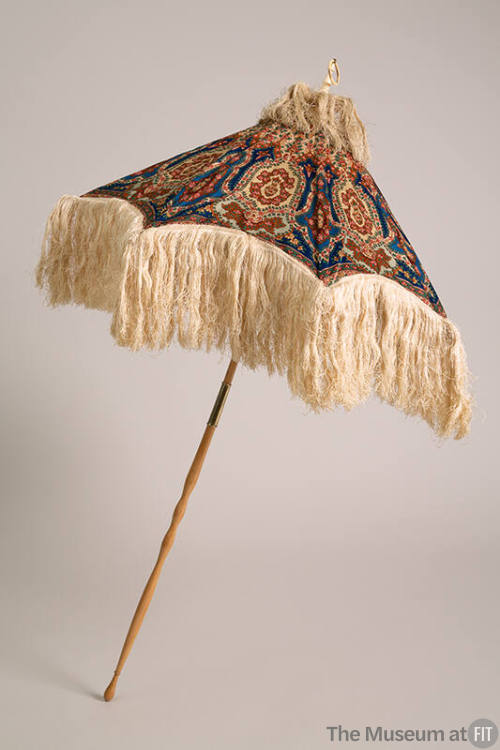

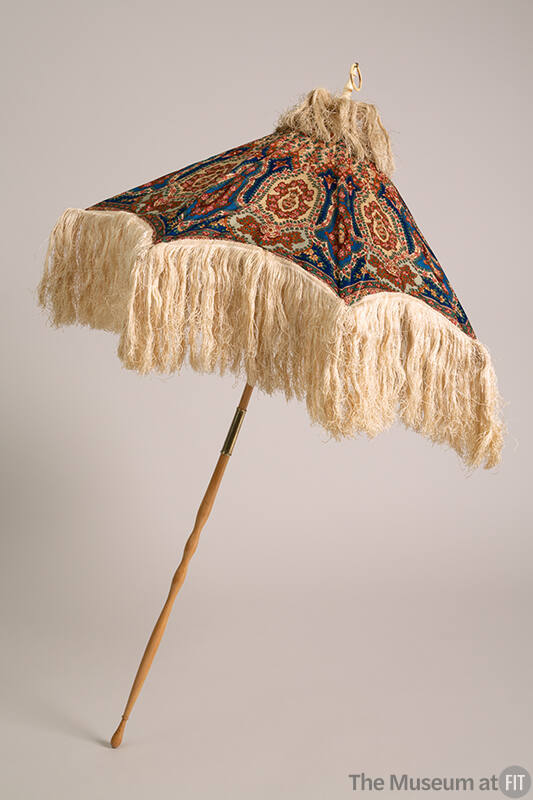
Parasol
Brand
Sangster
1860s
Silk and wood
Museum purchase
Object numberP84.19.8
The parasol was indispensable throughout the nineteenth century. Given its role in protecting the skin of the “fairer sex,” parasols became inexorably linked to notions of gender, class, and race, thus reinforcing social hierarchies. As a symbol of status and leisure, parasols symbolized an idealized bourgeois femininity and were viewed as extensions of the female body. Their domed shape echoed women’s voluminous skirts, complete with fringe and flounces. By linking the two, the fashionable woman came to be viewed as the ultimate male accessory.
DescriptionParasol in paisley silk challis in blue, rust orange / brown, green, rose pink, and beige, ivory silk fringe, seven ribs, wood shaftCollections
Exhibitions